
Okay, so check this out—I’ve been poking around Solana tooling for years. Wow! My first impression was: fast, but messy. Really? Yep. At first it felt like a rush of data with no clear roadmap, but slowly I learned where the useful bits lived and what to ignore.
Whoa! Solana moves at breakneck speed. Hmm… that energy is thrilling, but it also makes tracking NFTs and on-chain activity feel like trying to drink from a firehose. Something felt off about a lot of explorers early on—too much raw data, not enough context. My instinct said: there has to be a better way to slice this info. Initially I thought simple block data was enough, but then realized that for NFT markets and real user behavior you need richer views—token transfers, holder histories, marketplace events, and the tiny metadata changes that actually matter.
I’ll be honest: I’m biased toward tools that let me follow a story. I like to trace a mint -> primary sale -> secondary sales arc. Somethin’ about seeing that chain of events humanizes the ledger. On one hand it’s just numbers. On the other hand those numbers map to people making choices—bids, flips, failed listings—though actually that nuance is often buried unless you actively look for it.
Here’s what bugs me about some explorers—they present everything as an equal first-class citizen. That’s not how you think in the real world. You care about wallets that are active, collections that are moving, and contracts that keep changing. The best explorers make those patterns pop.
How solscan explorer fits into actual workflows
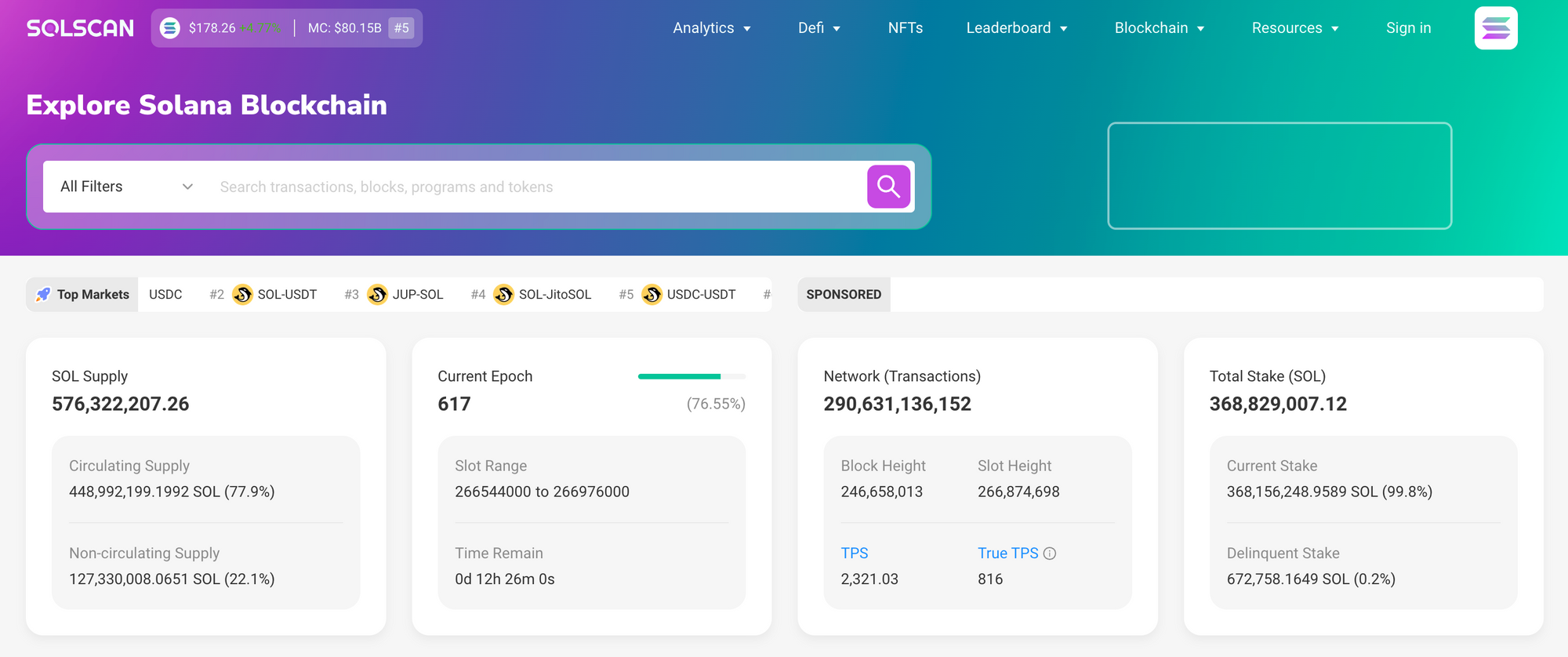
I started using solscan explorer because it felt like an honest compromise between raw node dumps and polished dashboards. Short version: it gives me access to the data I want, and the views I need, without forcing me into a subscription every time I want a deeper look. Seriously? Yes—especially for ad-hoc investigations or when I’m trying to vet a new drop.
Quick story: a month ago I spotted a weird wash-trade pattern in an up-and-coming collection. Initially I thought it was just two collectors trading back and forth. Actually, wait—let me rephrase that: at first glance it looked innocuous. But using the transfer timeline and holder history I traced several small wallets acting as liquidity funnels. That changed my view from “just regular trading” to “coordinated support to inflate floor price.” That kind of insight matters if you’re deciding whether to buy or hold.
Medium level detail matters. The transfer ledger, amount of unique holders, wallet concentration metrics, and marketplace fees—all those micro-views help build a risk profile. And I’m not saying this thing is perfect. It isn’t. There are quirks and edge cases. But for on-chain sleuthing it’s a solid starting point that I come back to, very very often.
On the technical side, Solscan’s indexer and query layers are pleasantly fast. The UI exposes contract calls, logs, and token metadata in ways that make sense for NFT folks. If you’re tracking royalties or suspect metadata swaps, those traces are crucial. I’m not 100% sure I understand every log detail, but the patterns become obvious after you look at a few collections side-by-side.
Something else—market context. A token’s floor price alone is a blunt instrument. You want sell-side liquidity, offer depth, and historical velocity. That latter metric—how often items move—tells you whether a floor is stable or just the result of a single aggressive buyer. Shopping for pieces without that context? That’s risky.
Here’s the thing. Tools should do two jobs: reveal the obvious quickly, and let you dig deep when you need to. Solscan handles both. A quick collection summary gives you floors and active supply counts. Drill into the NFT and you get a full transfer and ownership timeline. And when you need raw transaction data, it’s all there. Hmm… sometimes I still wish they had a tiny bit more advanced filtering in the UI, but the data’s accessible if you’re willing to put in a little elbow grease.
Practical workflow example: when I evaluate a mint, I look at three things in order. Short list: mint distribution (how many wallets got the mint), immediate transfer behavior (was everything moved out to marketplaces), and early holder behavior (did wallets keep or dump). If I see a handful of wallets collecting hundreds of mints then moving them, alarm bells ring. That pattern often signals bot farming or coordinated grabs.
Another example—if a collection’s floor gets a sudden bump, I check recent incoming liquidity from external wallets and whether marketplace listings followed. If listings dry up after a bump, that’s often manipulation. Solscan’s timeline and wallet graphs make it faster to confirm or rebut that suspicion. I’m biased, but that kind of detective work is fun; it feels like solving a small puzzle.
On-chain analytics go beyond NFTs. For builders and product folks, transaction cost breakdowns, token program interactions, and program upgrade histories are useful for debugging and audit trails. You want to know if a program recently changed authority or if a contract has odd call patterns that could be exploited. Solscan surfaces those things without requiring you to run a node.
I’ll say this: no explorer replaces comprehensive analytics platforms for heavy-lift research. But pairing a tool like solscan explorer with a dedicated analytics stack (or even a quick Grafana endpoint) often gives you the best of both worlds—speed for casual checks, depth for investigations. Oh, and by the way… for newcomers, the learning curve is less steep than you might expect. The UI nudges help you discover the parts that experienced users rely on.
There are limitations. Sometimes metadata is inconsistent and you have to manually reconcile IPFS URIs or off-chain assets. Contract-level analytics can be noisy when programs interact with many token accounts. And then there’s the UX randomness—little things like pagination quirks or occasional UI lag on heavy pages. But these are solvable and don’t break the core utility.
FAQ
Q: Is solscan explorer free to use?
Mostly yes. Many of the basic traces and transaction views are free. For programmatic access or very high-volume needs you might prefer running your own indexer or using a paid API, but for most NFT tracking and quick analytics, the free interface covers the essentials.
Q: Can I track marketplace events and royalties?
Short answer: yes. Marketplace interactions and transfer trails are visible, including which programs were used to execute trades. That helps you verify royalties and see if trades happened off-market. It’s not always perfectly labeled—sometimes you need to interpret logs—but the raw data is there so you can make the call.
Q: I need to verify a suspected exploit or wash trade—where to start?
Start with transfer timelines for involved wallets, then map inbound/outbound flows and program calls. Look for frequent rapid transfers between a cluster of wallets and external liquidity injections. If you want structured output, export transaction lists and run simple heuristics: repeated sub-1-minute transfers between the same wallet set is suspicious. This isn’t foolproof, but it’s an effective starting heuristic.
To wrap this up—well, not a neat wrap, because I like leaving a thread. I’m more confident about the ecosystem when explorers let me follow a narrative. That element of storytelling—mint to market to holder behavior—helps me make better decisions. I’m not claiming solscan explorer is the only tool you need. It isn’t. But it’s a dependable part of my toolkit, especially for NFTs and day-to-day Solana sleuthing.
One last thought: keep learning the data language. On-chain patterns repeat. Once you recognize the signs—bot farms, coordinated buys, legit organic demand—you’ll move faster and make fewer costly mistakes. And if you want a practical place to start poking around those patterns, give solscan explorer a look. It’s simple enough to start with, deep enough to keep using.